
Adult Summer Soccer in Blacktown: Season Dates and Age Groups
Updated: Oct 28
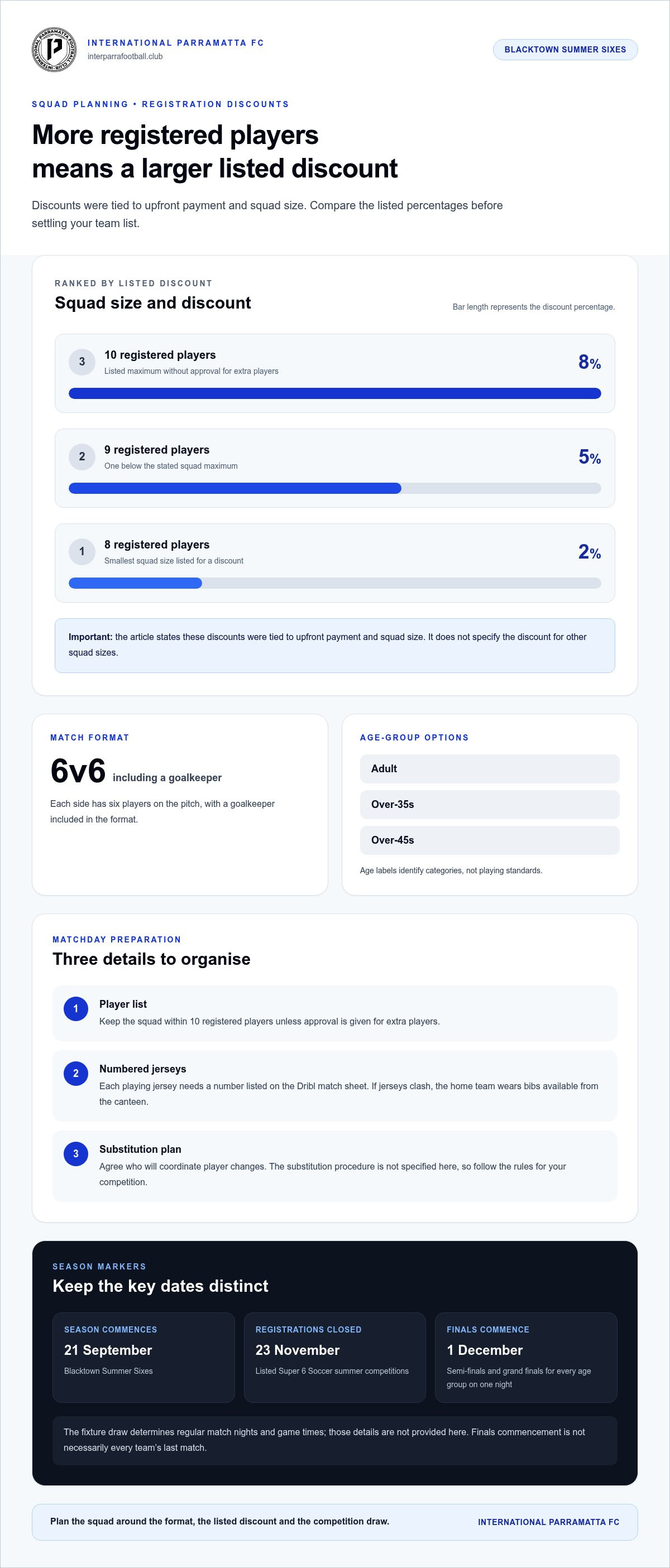
Blacktown Summer Sixes commences on 21 September, and its finals begin on 1 December. For adults looking for adult summer soccer in Blacktown, the competition includes adult, over-35s and over-45s age groups. Registration for the listed summer competitions closed on 23 November.
This guide explains the season schedule, adult age groups and playing options, so you can decide what suits your team. It also covers how the competition works and what to consider when bringing players together.
Table of Contents
Adult and over-35s and over-45s competitions
Blacktown Summer Sixes includes adult, over-35s and over-45s competitions. Cancellation, insurance, weather and safety arrangements are competition-specific. Their terms explain how fixture changes, player cover and safety procedures are handled.
Player eligibility and team requirements
Start by choosing the adult age category that fits your team. Blacktown Summer Sixes allows up to 10 registered players without approval for extra players. Matches are six-a-side, including a goalkeeper. That squad limit gives teams room to organise player rotations while keeping registration within the stated maximum.
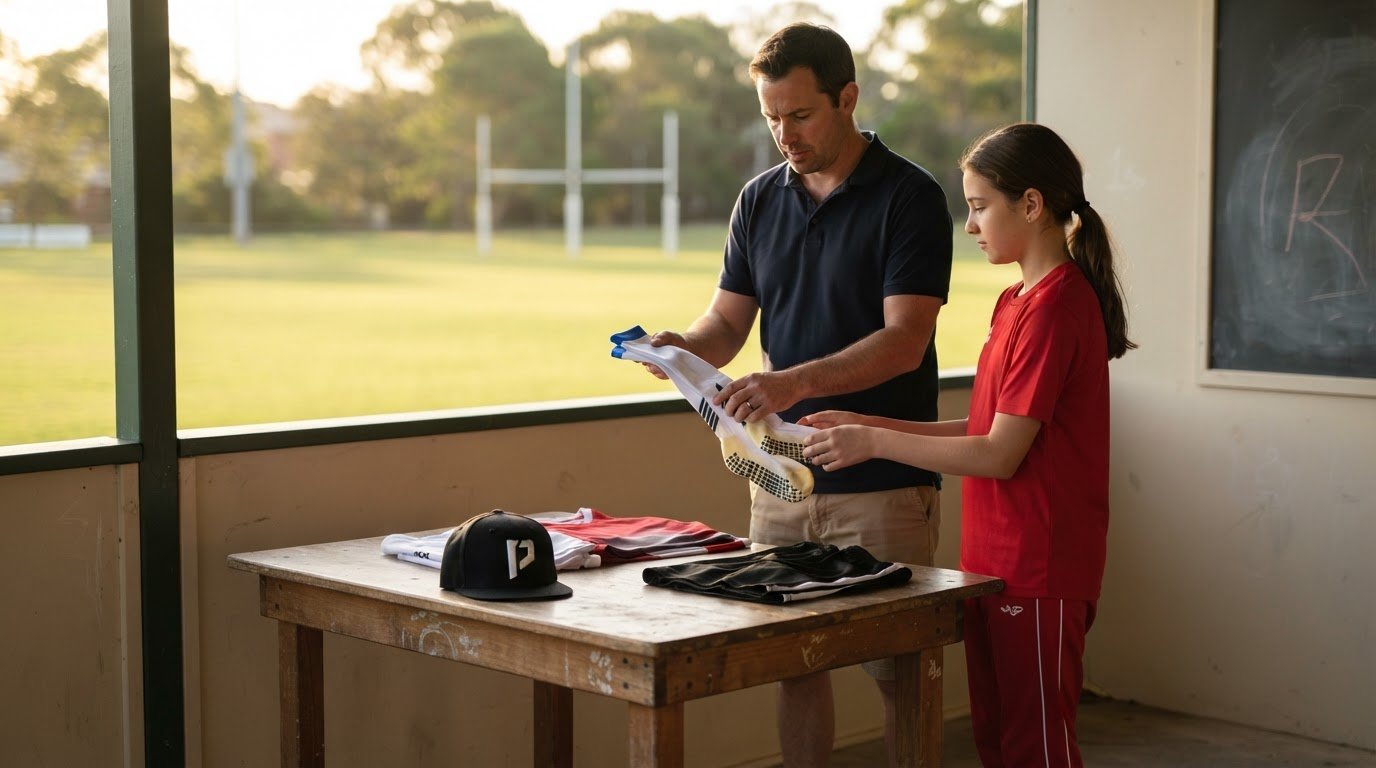
For matchday, each playing jersey needs a number listed on the Dribl match sheet. If the teams’ jerseys clash, the home team wears bibs available from the canteen. Prepare by organising the squad list, matching shirt numbers to players and bringing suitable shirts.
Agree on substitutions within your team before matchday. As no substitution procedure is specified here, don’t assume the same format applies across every league. Decide who will coordinate player changes and follow the rules for your competition during matches.
Match formats and weekly schedules
The Blacktown Summer Sixes format is 6v6, with a goalkeeper included in each side. Its adult age categories include all-age adults, over-35s and over-45s. Use the competition draw to plan around your team’s playing night; the available information doesn’t give an adult weekly schedule or game time.
Blacktown Summer Sixes finals commence on 1 December. Every age group contests finals, with semi-finals and grand finals played on one night. That format gives teams a clear date to keep in mind when organising their summer calendar, while the draw determines the regular match schedule.
Age-group labels can help teams identify a suitable competition, but they don’t cover every eligibility detail. Before forming a squad, agree on the category you intend to enter and organise player details together. This makes it easier to prepare a consistent registration list and avoid confusion about who is included.
Registration discounts were tied to upfront payment and squad size. Teams registering 8 players received an extra 2% discount; teams registering 9 received 5%; and teams registering 10 received 8%. These figures show why a team may want to settle its player list before submitting registration.
Use a simple preparation sequence: select an age category, gather player details, prepare numbered jerseys, then arrange matchday roles. Keep the 10-player maximum in mind when building a Blacktown Summer Sixes squad. For finals, retain 1 December in the team calendar, since each age group’s semi-finals and grand final take place on the same night.
Season length and start date
Blacktown Summer Sixes commences on 21 September, giving adult teams a clear seasonal starting point. Its finals commence on 1 December, marking the competition’s final stage. Those dates provide two useful calendar markers, but the finals commencement isn’t necessarily every team’s last match. Use the fixture draw to see where your team’s games sit between the opening and finals.
Keep season dates separate from registration deadlines. Registration for the listed Super 6 Soccer summer competitions closed on 23 November. That date is a registration deadline, not the season start or finish. If you’re organising a team, record registration, the opening date and finals separately. This makes it easier to see which task needs attention first and avoids confusing an entry deadline with a match date.
Start planning with the 21 September commencement, then map out the fixtures as they become part of your team calendar. Ask players to flag regular work, family or transport commitments before settling on a squad. For example, teammates who share a lift can compare their availability early. The fixture draw then helps the group plan for specific matches, rather than relying on assumptions about the weekly schedule.
Use the 1 December finals commencement as a forward planning point. It signals when the competition reaches its finals stage, so teams can keep that period open while following the draw for their own match details. A shared calendar can hold each fixture, team availability and transport arrangements in one place. This is especially useful when players need to coordinate commitments across a busy summer.
Registration timing also affects how a team gets organised. The listed Super 6 Soccer summer registrations closed on 23 November, while the Blacktown Summer Sixes season commences on 21 September. Treat those as distinct calendar details, not interchangeable dates. For future planning, begin by identifying the registration period, then organise player information and team availability around the competition schedule.
Seasonal Football Team Registration is a practical step for teams preparing to play together. Once your group has agreed to take part, gather player details and organise a shared calendar around the competition dates. You can explore seasonal football team registration as part of that preparation. Keep the commencement, registration deadline and finals period distinct, and use the fixture draw to plan each match.
Skill levels
Playing ability matters when choosing adult summer soccer in Blacktown. Age categories and skill levels serve different purposes. Blacktown Summer Sixes includes adult, over-35s and over-45s competitions. Those labels identify age groups, not playing standards. Consider your team’s experience and match goals before choosing where to play.
Past competition experience isn’t the only measure of a team’s fit. Your squad may include regular players, people returning to football and newcomers. Talk about everyone’s comfort with passing, receiving and moving into space. These basic skills provide a useful starting point for understanding how the group may play together.
Set expectations with a short team discussion before registration. Do players want a relaxed social outing, regular competition or a stronger challenge? Compare answers and agree on a shared goal. For example, a group returning to football may value taking part consistently more than results. This balance between social participation and organised recreation is common across adult team sports globally, from local football to organisations like the South Calgary Recreational Hockey League (SCRHL) that run community-based adult competitions.
Individual confidence can differ from the team’s overall ability. One player may have years of experience, while another is still learning match routines. Consider how the team communicates, keeps possession and responds to pressure. These examples help you describe the group honestly without judging everyone by one player’s experience.
Programs across the club cater for players of all ages and abilities, from age 3 through to adults, for males and females. That broad range shows football participation can suit different starting points. It doesn’t mean every adult competition has separate skill divisions. Keep age eligibility and playing ability as separate questions while planning your team.
If your group has mixed experience, agree on a few practical habits: share the ball, communicate clearly and give less experienced teammates time to settle into play. A returning player might organise warm-up passes while newer teammates practise calling for the ball. Shared routines make it easier to play as a team.
Before choosing a competition, list what would make the season enjoyable. You might want regular games, the chance to meet people or the challenge of facing stronger opposition. Discuss your priorities and make sure everyone understands the commitment. A clear conversation can prevent different expectations from shaping the season.
Players’ confidence and skills can develop during a season. Review your team’s experience together after playing instead of judging ability from one match. If the group wants a different challenge next time, use those observations to guide your next competition choice. Considering expectations, age group and ability together gives your team a more thoughtful start.
What are the match formats, game times, and weekly schedules?
Blacktown Summer Sixes uses a small-sided format, and the fixture lists each team’s playing time. Adult teams should check the match night and kick-off before organising work, travel or shared lifts. A weekly schedule helps players plan, but check each fixture too. Keep the competition name beside the date to avoid mixing up different draws.
Weekly schedules can differ between divisions. In Blacktown Summer Sixes, Girls Under 10, Girls Under 12, Girls Under 14, Girls Under 16 and All Age Women competitions run on Wednesday. These are specific girls’ and women’s divisions, not an adult men’s timetable. Use the exact division name when reading a draw, since a shared competition location doesn’t mean every group plays on the same night.
Game time is separate from match night. A Wednesday listing tells you the day, while the fixture gives the kick-off for each game. Before each round, share the fixture with teammates and note any time changes. This helps everyone arrive prepared and avoids confusing the weekly schedule with an individual match.
Plan adult team availability around the schedule rather than assuming a preferred night. Ask players about work, family and transport commitments, then compare their answers with the fixture. If several players share a lift, agree on a meeting point before matchday. This is especially useful when teammates are travelling from different parts of Blacktown.
The match format also affects how a team shares responsibilities. In a small-sided game, players need to communicate and move between attacking and defensive roles. Agree on goalkeeping turns and how the team will organise changes. A brief pre-match discussion helps everyone understand their role, whether they’re experienced or returning to football.
Use this quick routine to keep match details organised:
Save the competition draw under its full name.
Record each fixture’s date, match night and kick-off.
Share updates with the full squad.
Arrange transport and arrival plans before matchday.
Keep the weekly schedule somewhere easy to find, rather than relying on memory or messages buried in a group chat. For Blacktown Summer Sixes, distinguish Wednesday girls’ and women’s divisions from adult team fixtures. Use the relevant draw to plan the match night, kick-off and travel. Sharing the same details helps the squad focus on playing together once it reaches the pitch.
What rules apply to player eligibility, team sizes, uniforms, and substitutions?
Blacktown Summer Sixes sets practical requirements for adult players and teams. Adult, over-35s and over-45s categories give teams an age-group starting point. Eligibility for a category depends on the competition’s registration criteria, so use the relevant category rules when organising player details. Don’t treat a team’s preferred age group as a substitute for each player meeting its criteria.
The match format is six-a-side, including a goalkeeper. A team may register up to 10 players without approval for extra players. That means your registered squad can include players beyond the six on the field. Plan a team list that meets the stated maximum, and organise who will play each position before matchday.
Player registration and substitutions are separate matters. The 10-player limit applies to registered squad size; it doesn’t by itself set the substitution procedure. Use the competition’s match rules to manage player changes during a game. Before play, agree how your team will communicate substitutions and who will organise the rotation, so players know when they’re needed.
There’s a specific match-sheet requirement for playing jerseys: each must have a number listed on the Dribl match sheet. Match shirt numbers to players before the game instead of relying on memory at the sideline. If your team’s jerseys clash with the opposition’s, the home team must wear bibs available from the canteen.
Organise these details together for smoother registration and matchdays:
Choose the correct adult, over-35s or over-45s category.
Keep the registered squad within the 10-player maximum unless extra players receive approval.
Match each jersey number to the Dribl match sheet.
Agree on a substitution plan using the competition’s match rules.
Remember that the home team wears canteen bibs if jerseys clash.
These steps connect eligibility, squad size and match preparation without confusing registration limits with on-field arrangements. For example, a team of 10 registered players still fields six at a time, including its goalkeeper. Jersey numbers and the match sheet help identify players, while the bib rule gives the home team a clear option during a colour clash.
If your group is ready to organise a team, take the next step with seasonal football team registration. Bring your category choice and player details together, then prepare the match sheet and jerseys around the competition requirements.
Include a colour check in your pre-match conversation so the team knows what to do if the shirts are difficult to distinguish. For a jersey clash in Blacktown Summer Sixes, the home team must wear bibs available from the canteen. Confirm which side is at home and prepare accordingly, rather than leaving the decision until players are about to start. This keeps matchday arrangements straightforward and lets players focus on getting ready for the game.
International Parramatta FC: Summer Soccer
International Parramatta FC runs Summer Soccer for people ready to play as the warmer months arrive. If you’re bringing a group together, Seasonal Football Team Registration is another way to organise participation. The club welcomes male and female players of all ages and abilities, from young children to adults, through its programs.
International Parramatta FC offers a friendly way to take part in football and helps teams organise seasonal registration. If you’d like to build confidence before joining a team, you can also take part in Holiday Clinics.
For details about taking part, visit International Parramatta FC’s website.
Make your next move on the pitch
Adult summer soccer in Blacktown can be more than filling a spot in a team. It’s a chance to build a regular routine, reconnect with football and share the game with people who bring different experience and energy. Before you take the next step, talk with teammates about what you want from the season: friendly competition, a reason to get active or a shared goal to work towards.
International Parramatta FC offers Summer Soccer and Seasonal Football Team Registration for players and groups ready to take part. If you’d like to build confidence before joining a team, Holiday Clinics offer another way to get involved in football. Choose the option that suits your plans, then bring your enthusiasm and team spirit.
Explore the options and take your next step with International Parramatta FC. A new season is a fresh chance to enjoy football, meet teammates and make the game part of your summer.
Frequently Asked Questions
When does the season commence and end?
Blacktown Summer Sixes commences on 21 September, with finals commencing on 1 December. The season’s closing point follows its final fixture, so use the competition draw to plan around the last match. This distinction helps when arranging work or family commitments: the finals start date marks the final stage, rather than the end of every team’s participation.
Which adult competitions can I play in Blacktown, NSW?
Adult summer soccer in Blacktown includes Blacktown Summer Sixes adult, over-35s and over-45s competitions. These age-group options suit teams looking to play together in a summer six-a-side format. If you’re bringing together players with different football backgrounds, discuss your preferred age category and playing goals before organising a squad. Keep the competition name and age group clear in team messages.
When does the Blacktown adult summer league start and finish?
For adult summer soccer in Blacktown, check the competition draw for the season and finals schedule. Registration for the listed Super 6 Soccer summer competitions closed on 23 November, a separate date from the season calendar. Keep registration deadlines, regular fixtures and finals dates in separate calendar entries. The fixture draw shows your team’s match dates and final scheduled game.
What age groups, divisions, and skill levels are available?
Blacktown Summer Sixes lists adult, over-35s and over-45s age groups. These categories describe age eligibility, rather than a player’s experience or skill. Programs for players of different ages and abilities are available for males and females, while a team can discuss its shared goals before choosing a competition. For example, returning players and beginners can decide whether social participation or a stronger challenge matters most.
How much do adult summer soccer teams and players pay in Blacktown?
Teams paying upfront received an extra 2% discount with 8 registered players, 5% with 9, or 8% with 10.
Comments