
All Abilities Soccer in Cumberland: Disability Football Options
Football in Cumberland can welcome players of different ages and abilities, from early childhood through adult competition. If you’re looking for all abilities soccer in Cumberland, local options include junior, youth and adult men’s and women’s football, with participation starting at age three.
Finding a comfortable way to join in matters as much as choosing a team. A player may be looking for a welcoming first experience, a chance to build confidence or the enjoyment of playing alongside others. The best starting point depends on their age and what they hope to get from football.
This guide covers local ways to play, what to consider when choosing a format, and how seasonal teams, Summer Soccer and Holiday Clinics can suit different needs. These practical pointers can help players and families explore football and decide what might be the right fit.
Table of Contents
Ways to play football in Cumberland
All-abilities soccer is football that supports players with different abilities. In Cumberland, options span age groups from three-year-olds through junior, youth and adult men’s and women’s competitions. The phrase “all-abilities soccer in Cumberland” can describe the search for a suitable way to participate, rather than one specific competition format.
Inclusive soccer brings players with different abilities together. Mainstream soccer generally refers to the club or team format a player joins, which may include people with varied experience and support needs. These terms can overlap, but they don’t automatically identify separate local programs or guarantee particular adjustments.
Start by matching the player’s age and preferred experience with an appropriate competition stage. A three-year-old may be ready for an introduction to football, while a teenager may prefer a youth team. Adults can consider the men’s or women’s competition categories. These age groups offer a practical way to begin narrowing the options.
Recreational play prioritises participation and enjoyment, while competition focuses more on organised matches. The right format depends on the player’s goals, comfort and support needs. Someone building confidence may value a welcoming first experience; another player may enjoy regular team fixtures and shared match-day routines.
To explore the options, start with three details: the player’s age, preferred level of competition and any adjustments that help them participate. Use these to guide a conversation about suitable teams or sessions. A player with cerebral palsy or epilepsy, for example, may have individual considerations that shape what feels comfortable.
All-abilities, inclusive and mainstream describe approaches, not a single rulebook. Ask how a session is organised, what taking part involves and how to discuss the player’s needs. This gives families a clearer basis for choosing between age-based football and a more adapted experience in Cumberland.
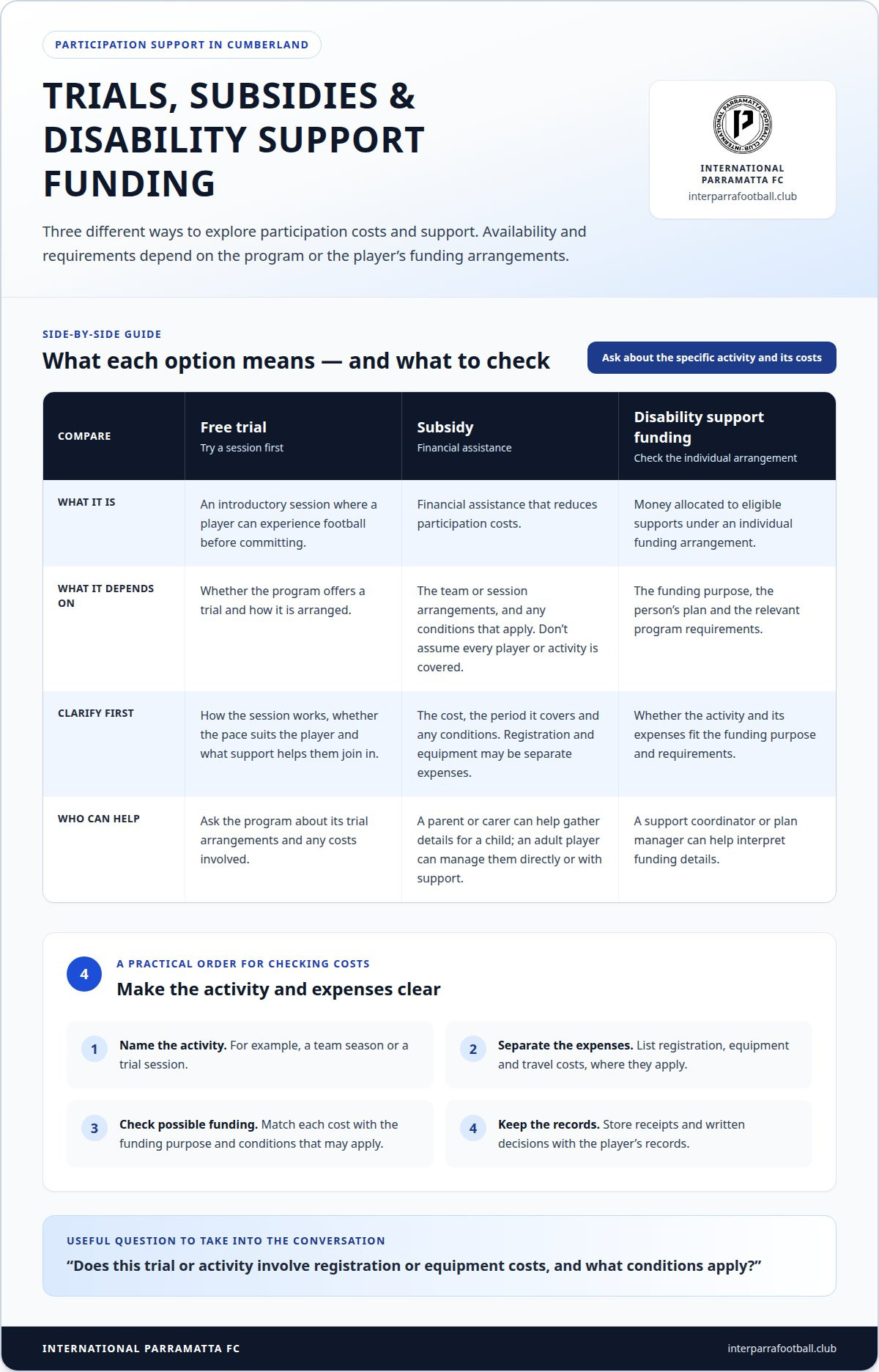
Are there free trials, subsidies, or disability support funding options?
A free trial is an introductory session where a player can experience football before committing. Whether one is offered depends on the program’s arrangements. During a session, notice practical details: how activities are explained, whether the pace suits the player and what support helps them join in.
A subsidy is financial assistance that reduces participation costs. Arrangements vary, so don’t assume a subsidy applies to every team, session or player. Before making a budget, identify the cost, the period it covers and any conditions. For example, registration and equipment may be separate expenses.
Disability support funding is money allocated to eligible supports under an individual funding arrangement. Whether a football activity fits depends on the funding purpose, the person’s plan and the relevant program’s requirements. A support coordinator or plan manager can help interpret those details for a player considering community sport.
To explore funding, organise the details in a simple order:
Write down the activity, such as a team season or a trial session.
Separate registration, equipment and travel costs, where they apply.
Match each cost with the funding purpose and conditions that may apply.
Keep receipts and written decisions with the player’s records.
For a child, a parent or carer can help gather those details. An adult player may prefer to manage them directly or with support. For example, ask whether a trial involves registration or equipment costs, then discuss those specific expenses with the person who manages the player’s funding. This keeps the conversation focused on the activity and its costs.
Funding questions are easier to resolve when the activity and expense are clearly described. If you’re also considering a seasonal format, explore Summer Soccer as one way to take part in football.
What accessibility, coaching, and support needs are accommodated?
Accessibility means removing barriers to joining a football session. For a player with cerebral palsy, movement, balance or fatigue may affect what feels manageable. For someone with epilepsy, support needs may include clear communication about what to do if a seizure occurs. Each player’s needs are individual, so discuss practical arrangements before play.
Coaching adjustments are changes to instructions or activities that help a player take part. A coach might demonstrate a drill, break it into smaller steps or allow more time to practise. For example, seeing a movement demonstrated first may help a player who finds verbal instructions difficult to follow. These are options to discuss, not assumptions about every session.
Communication support means sharing information in a way the player can understand and use. A parent, carer or player can explain helpful cues, preferred ways to receive instructions and situations that cause discomfort. If a player needs more time to process directions, agreeing on a simple signal can make a group activity easier to follow.
Before a session, make a short list of the player’s priorities:
Movement, mobility or balance considerations during drills.
Communication preferences, such as spoken cues or demonstrations.
Useful breaks, quieter moments or a predictable session routine.
Relevant safety information and the agreed response if support is needed.
Equipment and the playing environment can also affect access. A mobility aid, for instance, may influence how a player moves between activities; noise or busy surroundings may make it harder to concentrate. Describe the specific situation rather than relying on a general label. This helps coaches understand what the player can do independently and where support may help.
Good planning centres on the player’s goals, not just a diagnosis. Discuss one or two adjustments that could make the first activity clearer or more comfortable, then review how they worked. This keeps support practical and responsive as the player gains confidence and becomes familiar with the football setting.
Are programs available for children, teenagers, and adults?
Age-based football groups organise players by stage of participation. In Cumberland, options range from early childhood, starting at age three, through junior and youth categories to adult men’s and women’s competitions.
Early-childhood football introduces young players to the game. From age three, a child can explore football through age-appropriate participation. Families can consider whether the child enjoys group activities, following simple instructions and taking part with others. A practical first step is to match the child’s age with the relevant program category.
Junior football is a pathway for children beyond early childhood. The junior category gives families a way to explore organised play as a child grows and develops. If a child has played informally, a junior team may offer a more structured group experience. Their age and preferred pace can help guide the choice.
Youth football is for teenage players. A teenager might be new to the sport or ready to continue playing after junior football. Consider whether they want a social introduction, regular team participation or a more competitive setting. Those goals can help identify an experience to explore.
Adult football offers organised play for grown players. Cumberland options include men’s and women’s competitions, giving adults a route into team football at different experience levels. A new adult player can start by identifying their preferred competition category and any support or adjustments that would help them participate.
Age is a useful starting point, but the right category also depends on what the player wants from football. To narrow the choice, consider:
The player’s age and the relevant early-childhood, junior, youth or adult category.
Whether they prefer a social introduction or organised competition.
Any communication, access or support needs that matter during play.
These categories include players of different abilities and both male and female participants. A player’s age, goals and individual needs can help shape a suitable starting point.
International Parramatta FC: Summer Soccer
International Parramatta FC offers Summer Soccer for players looking to take part outside seasonal team registration. For someone seeking a more informal starting point, it can be explored alongside seasonal registration or Holiday Clinics.
For a player with disability, the right fit depends on their goals, access needs and the session format. Consider practical details such as communication preferences, movement needs and helpful adjustments when deciding what kind of football to pursue. This can make the next step clearer without assuming every player needs the same support.
Summer Soccer is one of the club’s football activities, but it doesn’t promise a specific disability program or adjustment. Choose the pathway that best matches the player’s interests and needs. For a friendly conversation about taking part, contact International Parramatta FC.
Take the next step towards playing
A first step into football can help a player discover what they enjoy, what feels comfortable and what they’d like to try next. For families considering all-abilities soccer in Cumberland, keeping the player’s interests at the centre can make the choice clearer. A good session might mean meeting teammates, practising a skill or simply being part of the game.
There’s no need to plan every detail at once. Start with the player’s preferred way to take part, then talk through the practical details that matter to them. A parent, carer or support person can share useful information while making space for the player’s own voice and choices.
If you’re ready to explore a football option, contact International Parramatta FC and take the next step at a pace that feels right. Every player deserves the chance to find enjoyment, connection and a place in the game.



Comments