
Under 5s Soccer Classes in Blacktown
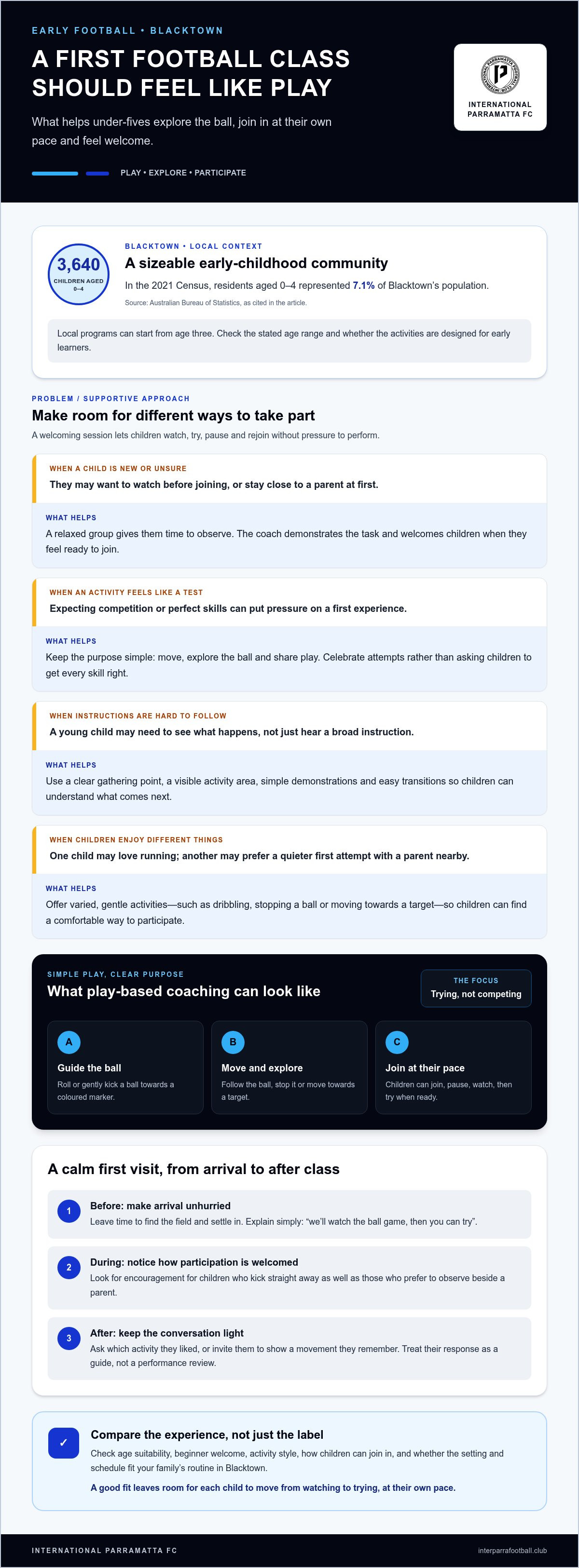
A first football class for a child under five should feel like play, not a test. An under 5s soccer program in Blacktown gives young children a friendly way to move, explore the ball and join simple group activities; local club programs can start from age three.
It’s understandable to want your little one to feel welcome, even if they’re shy, new to football or still finding their feet. At this age, relaxed, play-based activities can help children enjoy being active and learn by trying things at their own pace, without pressure to compete or get every skill right.
This guide explains what to look for in under 5s soccer classes around Blacktown, how a typical session can support early movement and confidence, and what helps make the experience enjoyable for your child. You’ll also learn how International Parramatta FC’s local football offerings can provide a next step for families exploring ways to get involved in the game.
Table of Contents
Blacktown-area children's soccer classes
Choosing a children’s soccer class in Blacktown starts with fit, not reputation. A welcoming session gives a young child room to explore the ball, watch others and join in when ready. For families comparing local options, the practical question is whether the activities suit their child’s age, confidence and interest in group play.
Blacktown has a sizeable early-childhood community. In the 2021 Census, Blacktown had 3,640 residents aged 0-4, representing 7.1% of its population, according to the Australian Bureau of Statistics. That local context helps explain why families may look for activities that combine movement, play and social connection close to home.
Before choosing a class, look at its main purpose. A program for young children should introduce simple ball activities and shared play, rather than expect match experience. For example, a child might roll a ball towards a marker, follow it, then return it to a group. These small tasks make participation easier to understand.
Age guidance matters because children develop at different rates. Check the stated age range and whether activities are intended for early learners. A child who is new to group activities may prefer simple demonstrations and chances to observe. Another child may enjoy joining each activity straight away.
Consider the class setting, too. A clear gathering point, visible activity area and simple transitions can help a child understand what happens next. Notice how the coach explains a task, demonstrates the movement and welcomes children who need time. These details give families a better sense of the session’s approach.
Parents can also look for variety in the activities. Gentle dribbling, stopping a ball and moving towards a target offer different ways to take part. A child who enjoys running might follow a ball between markers, while a quieter child could begin by rolling it with a parent nearby.
What to look for in a local class
Use the program description and enrolment information to compare practical details. Focus on what children do, how activities are introduced and how new participants can join. A useful description explains the play experience in everyday language, rather than relying on broad promises about results.
Look for ball activities that are easy to demonstrate, such as rolling, stopping or gentle kicking.
Check that the session welcomes beginners, not only children who already play football.
Notice whether the class allows children to watch before joining an activity.
Choose a setting and schedule that fit your family’s regular routine in Blacktown.
These points can help you picture the experience before enrolling. If your child enjoys copying movements, for instance, a coach’s demonstration may make an activity feel familiar. If they prefer watching at first, a relaxed group format can give them time to understand the game before joining.
Think about what your child enjoys outside football, too. Chasing bubbles, carrying toys or playing follow-the-leader can show whether they like movement, turn-taking or copying simple actions. These everyday examples help you choose an inviting program, rather than treating soccer experience as a requirement.
Plan the first visit around a calm arrival. Leave time to find the field, settle your child and explain what they might see. A short introduction such as “we’ll watch the ball game, then you can try” gives a young child a simple picture of the activity.
During the session, notice how the coach responds to different participation styles. One child may kick straight away; another may stay beside a parent and observe. Encouraging both approaches can make the group feel more inclusive and help each child find a comfortable way to engage.
After the session, keep the conversation light. Ask which activity they liked, or invite them to show a movement they remember. If they mention a coloured marker or a rolling game, that example can help you understand what caught their interest without turning the experience into a performance review.
Families searching for an under 5s soccer program in Blacktown can use these observations to compare classes thoughtfully. Focus on age suitability, activity style, beginner welcome and the way coaches guide participation. Those practical details are more useful than assuming every young child wants the same pace or challenge.
As your child grows more comfortable, their interests may change. They might move from watching to trying a kick, or from individual play to sharing a ball with others. A suitable program leaves room for those small shifts, keeping the experience centred on participation and enjoyment.
Use your child’s response as one guide, alongside the program information and setting. A relaxed first experience can help you see whether the group suits your family. Across Blacktown, Parramatta, Cumberland and the Hills, these concrete details can help you find an early football activity that feels like a positive fit.
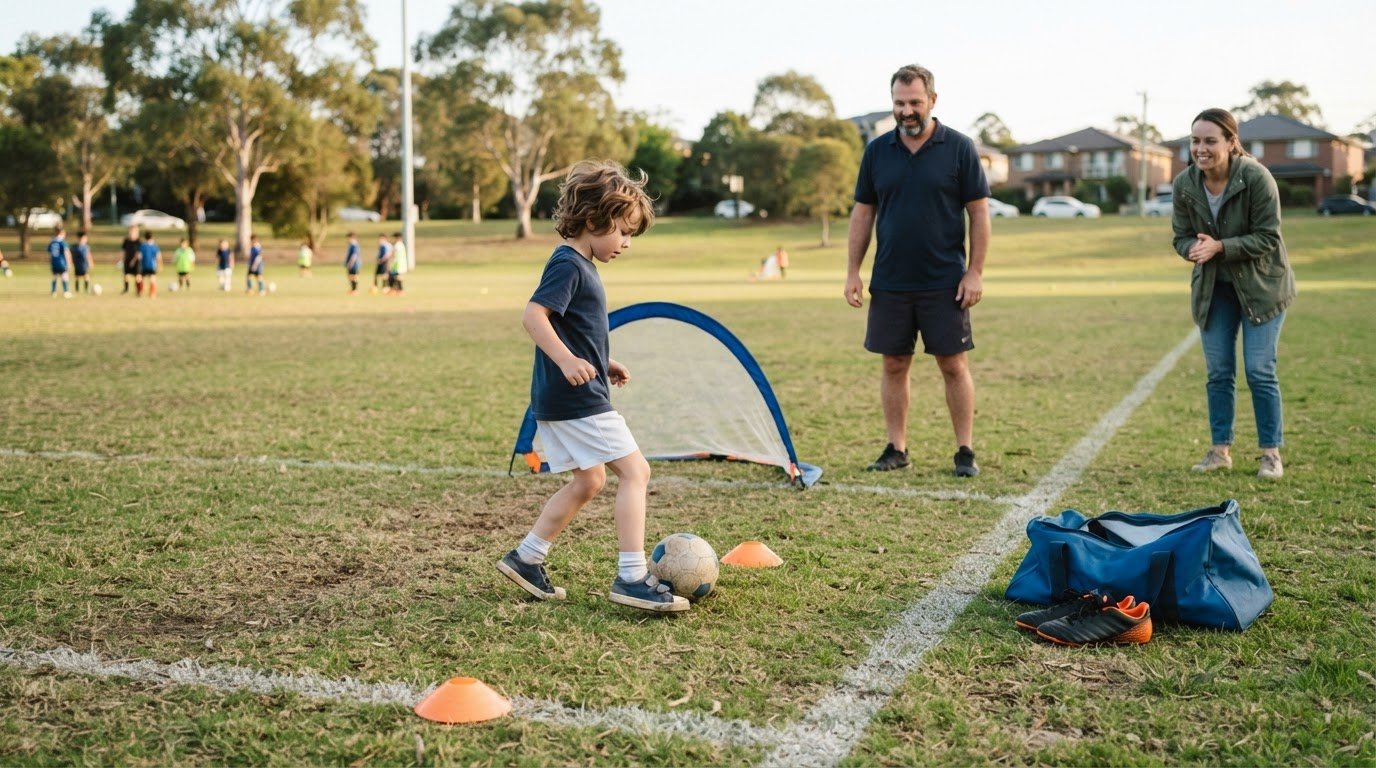
Play-based, pressure-free coaching
For a young child, learning football can begin with a game, not a drill. A coach might invite children to guide a ball towards a coloured marker, then celebrate each attempt. The activity introduces movement and ball contact without asking anyone to compete or perform perfectly. Children can join, pause, watch, then try when ready.
Play-based activities give children a simple purpose. A pretend journey across the field, for example, can involve walking, stopping and gently kicking a ball. The coach demonstrates each movement in plain language, then lets children explore. If a child kicks away from the marker, the coach can help them try again without turning the moment into a test.
Pressure-free doesn’t mean unstructured. A calm session can have a clear welcome, a short demonstration, playful activities and an easy finish. Transitions help children know what comes next. A coach might gather the group, show how to roll the ball, then invite everyone to try in their own way.
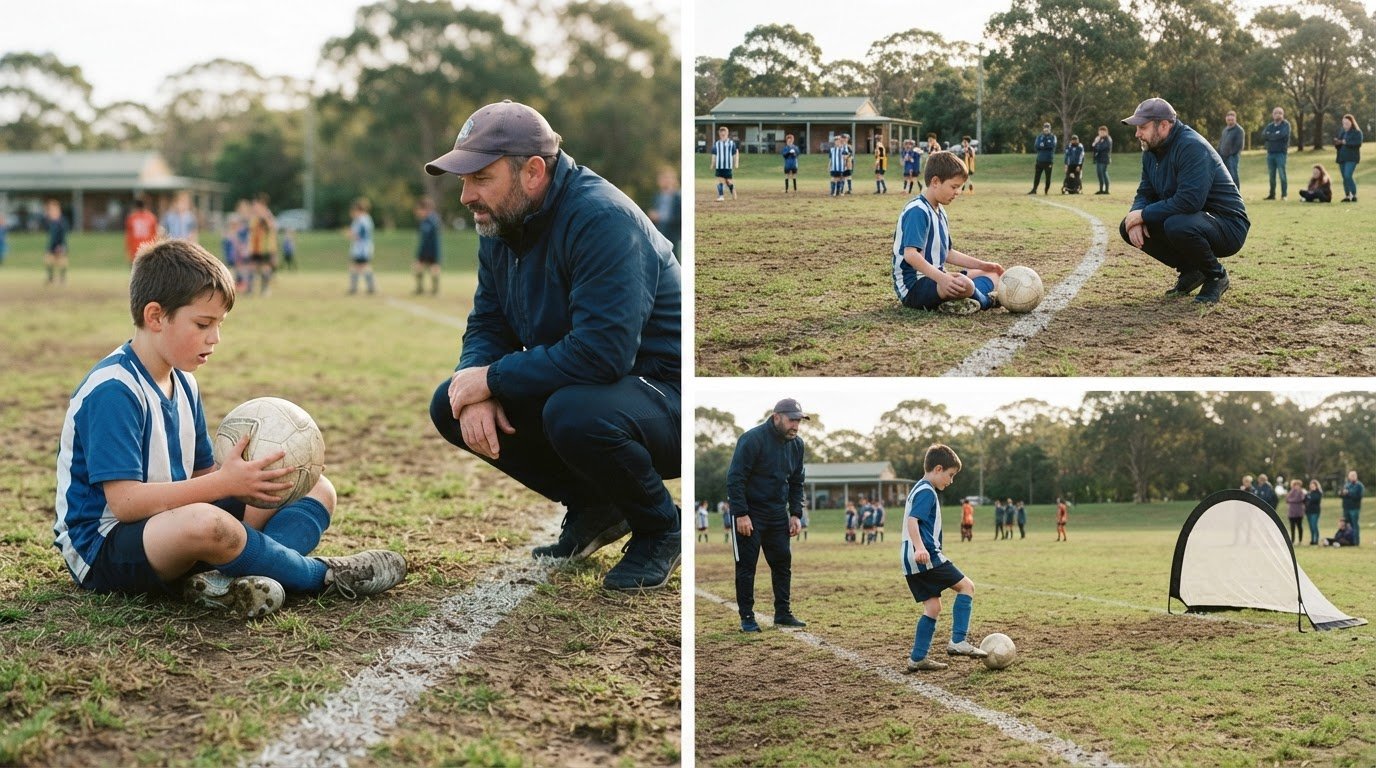
Notice how the coach responds when children participate differently. One child might copy the demonstration straight away; another might stay close to a caregiver. A welcoming coach acknowledges both, offers a simple invitation and avoids making participation a condition for praise. That approach makes the activity more welcoming for different temperaments and experience levels.
What supportive coaching looks like
Look for instructions children can act on, such as “stop the ball” or “kick it towards the cone”. A short demonstration makes the task clear. The coach can then give children space to experiment, rather than correcting every movement. Encouragement can focus on effort: “You had a go” recognises participation without comparing children.
Choose playful tasks, such as rolling a ball to a partner or following it around a marker.
Notice whether children can watch before joining, especially during a new activity.
Look for calm guidance when a child loses interest or needs a break.
Listen for praise that welcomes effort instead of ranking skill or speed.
These details make it easier to picture the session’s atmosphere. A coach can turn missed kicks into another chance, rather than a reason to stop. A child who wants to watch can observe the next turn, then decide whether to join. The activity stays purposeful, while each child has room to respond.
Play also creates chances to practise simple social habits. Passing a ball gently to a partner introduces taking turns. Waiting near a marker gives children a visible place to stand. A coach can model “your turn” and “my turn”, helping the group understand the game through actions and familiar words.
Parents can support this approach without coaching from the sidelines. Try a warm greeting, then let the coach lead. If your child hesitates, a quiet invitation such as “watch this kick with me” keeps the choice gentle. After the session, ask what they enjoyed, rather than whether they scored or won.
Keep expectations centred on the experience. A young child might remember the bright cones, a friendly game or simply running beside the ball. Those examples are useful clues about what felt enjoyable. They can guide your next choice, while leaving room for interests to change as your child becomes familiar with group play.
In Blacktown, families exploring early football can look for coaching that combines clear direction with child-led exploration. A playful activity should still have a simple goal, such as moving towards a marker or sharing a ball. If you’re ready to explore local football activities, find a welcoming place to play.
Waiting near a partner can make turn-taking feel like part of the game: children can notice when it is their turn, offer the ball and continue at a comfortable pace. Coaches can keep the invitation simple and allow a child to watch or pause. The aim is not to make every child respond in the same way, but to keep the activity friendly and manageable.
Experience and session design may also help families understand the setting. Coach Lyndon has coached Little Kickers classes since 2020. Coach Andre has coached Little Kickers classes since 2024. The holiday clinic sessions followed development systems based on the FFA curriculum. These details offer context, while a visit or conversation can help families judge whether the coach’s communication, pace and playful activities suit their child. A good fit leaves room for curiosity, quiet observation and gradual participation.
International Parramatta FC: Summer Soccer
International Parramatta FC offers Summer Soccer for families looking for a welcoming way to keep football in their routine. It can be a natural next step when your child enjoys kicking a ball and wants to take part in a club activity. The relaxed, play-focused approach you’ve been considering can help guide what feels like a good fit for your family.
If you’re exploring other ways to stay involved, seasonal football team registration and Holiday Clinics offer additional club activities. Choose the option that best matches your child’s interest and your family’s plans. There’s no need to turn early play into a performance goal; enjoying the activity and feeling part of a group are worthwhile reasons to take part.
For details about Summer Soccer and other club activities, visit International Parramatta FC online.
Choose a joyful next step
Your child’s first football experiences can help shape how they feel about joining in later. As you consider an under 5s soccer program in Blacktown, let their interests guide the next step: perhaps they’re ready to keep playing, or perhaps they’d enjoy trying a new group activity when it suits your family.
International Parramatta FC offers Summer Soccer, Seasonal Football Team Registration and Holiday Clinics for families exploring football. Each gives you a different option to consider as your child’s interest develops. Choose the activity that feels right for your family, without turning play into a performance goal.
Explore International Parramatta FC’s football activities and see which next step feels like a good fit. Every new kick, shared game and friendly hello can make football feel more familiar. Enjoy finding your family’s way into the game!
Frequently Asked Questions
Which Blacktown soccer clubs offer programs for 3- and 4-year-olds?
International Parramatta FC offers football programs from age 3, and Blacktown is within its local area. For families looking for an under 5s soccer program in Blacktown, the relevant option depends on whether your child wants seasonal team participation or a less regular football activity. Consider your child’s interest and routine when choosing between Seasonal Football Team Registration, Summer Soccer and Holiday Clinics.

Comments