
Womens Social Soccer in Parramatta: League Format and Ages
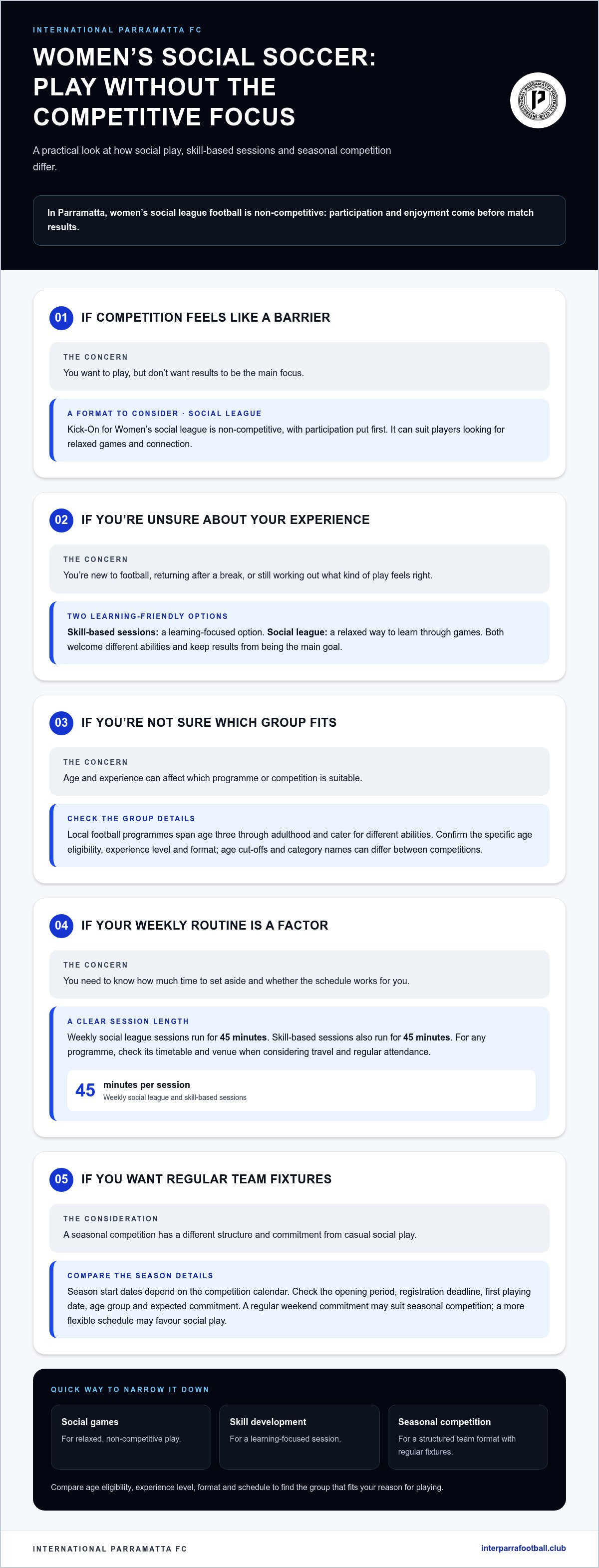
A social league can welcome both first-time players and women returning to the game. In Parramatta, women’s social soccer sessions are non-competitive and run for 45 minutes each week, while local football programs span age three through adulthood and cater for different abilities.
It’s natural to wonder whether you’ll fit in, especially if you’re unsure about your experience or how teams are organised. This guide to women’s social soccer in Parramatta explains who can take part, how age and skill shape playing groups, what to expect from the format and how often sessions run.
You’ll also learn how social play differs from competition-focused football, so you can choose a setting that suits your goals. Whether you want an easygoing way to get active or a welcoming place to build confidence with others, here’s what to consider before joining.
Table of Contents
Female player recruitment
Women looking for football in Parramatta can compare social play with seasonal team competitions. The right option depends on whether you want casual games, regular fixtures or a group focused on learning.
Available teams and leagues
A non-competitive women’s social league suits players who want to enjoy football without making results the main focus. Before choosing, consider whether you prefer social matches or a structured seasonal competition.
When considering women’s social soccer in Parramatta, start with the format. Does the programme focus on games, skill development or both? Then compare its age group, experience level and schedule with your needs. A beginner returning to football, for example, may prefer a relaxed session to formal team fixtures.
Playing locations matter, too. The specific ground depends on the league’s scheduled venue, so consider travel from Parramatta and nearby suburbs when comparing options. Think about your usual transport, the time you can arrive and whether the venue fits your weekly routine. Those details can make regular attendance easier.
Registration and season timing
Registration follows each programme’s entry process and calendar. For seasonal team football, first identify the relevant women’s age group and competition, then complete the required player registration. Social programmes have their own enrolment process and timetable.
Season start dates depend on the competition calendar, so there isn’t one date for every women’s league. Check the opening period, registration deadline and first playing date together. Joining after a season starts, for example, may leave fewer fixtures available than registering before team entries are finalised.
Before enrolling, consider your preferred format and availability. A regular weekend commitment may suit a seasonal competition, while a more flexible schedule may favour social play. Read the registration details to understand the expected commitment, how teams are organised and how fixtures are communicated.
Joining without a team
You can join as an individual if the league accepts solo registrations and places players in teams. Competitions that accept only complete team entries require players to register as part of a team. Check whether registration is open to individuals, teams or both.
If you’re joining alone, note your playing experience, preferred position and availability. These details can help with placement when individual players are allocated to teams. Someone new to football, for example, may prefer a social group, while a returning player may want a seasonal team with regular fixtures.
Women considering a team entry together should compare the league’s age categories and format before registering. If you are hoping to expand your social circle or connect with like-minded women to join activities with, dedicated friendship platforms such as after-5.co offer a welcoming way to make new friends. Whether you arrive alone or with friends, choose an option whose schedule and style suit you. It’s a practical starting point for playing football in Parramatta.
Competition age and skill categories
Football programmes in Parramatta can cater for players from age three through adulthood, across different ability levels. Check the age group and experience level accepted by a competition before choosing.
Competition age categories
Age categories help players find an appropriate level of competition. Local programmes can include early childhood, junior, youth and adult groups, with separate men’s and women’s competitions. Check the specific group’s age eligibility, as the overall age range doesn’t tell you its format.
A three-year-old, for example, belongs in an early-childhood setting, not an adult competition. Junior and youth categories offer other age-based options, while adult women’s competitions are for adult players. These broad groupings help narrow your choices before you review registration details.
Age cut-offs and category names can differ between competitions. Read the relevant season rules carefully, especially if a player is near an age boundary. This helps you choose the correct group rather than relying on a team name or the ages of its current players.
Also consider the type of football you want. Social games and seasonal competitions can have different expectations, even within the same age category. Start by confirming age eligibility, then compare the format and schedule. This makes choosing easier for new players and those returning after a break.
Beginner-friendly skill levels
Beginners can choose social football that welcomes different abilities. Kick-On for Women’s social league is non-competitive, while skill-based sessions offer a learning-focused option. Both formats suit players who want to participate without making results the main goal.
Consider what would help you feel comfortable joining. If you’re new to football, a skill-based session may be a useful starting point. If you’d rather learn by playing, a non-competitive social league offers game time in a relaxed format. Choose the focus that suits you, rather than the most competitive option.
“All abilities” can include everyone from first-time players to those returning with some experience. Before enrolling, compare the stated skill level with your comfort, goals and preferred pace. Someone looking to build confidence in passing, for instance, may prefer skill practice, while a player keen to meet others may enjoy social games.
Use these criteria together: age eligibility, competition style and skill level. If you’re exploring options for different ages and abilities, compare local football options as one next step. A good fit is the group that matches your age, experience and reason for playing.
Social league format
Kick-On for Women’s social league football is non-competitive. Its weekly sessions run for 45 minutes, giving players a clear session length to plan around. For women’s social soccer in Parramatta, that format can suit people who want to enjoy football without making match results the main focus.
Non-competitive play puts participation first. It can suit someone returning to football or trying organised games for the first time. Consider whether you’d rather play matches or practise skills. The right format depends on what you want from your time on the pitch.
Kick-On for Women also runs skill-based sessions, each lasting 45 minutes weekly. These have a different focus from social league play: players work on football skills rather than making games the centre of the session. If you’re looking at women’s social soccer in Parramatta, think about whether you’d rather learn through practice or join in with non-competitive games.
Equipment, uniform and insurance depend on each competition’s participation terms. Read those terms during registration to understand required clothing or equipment and applicable insurance arrangements. Don’t assume a social format supplies gear, includes a uniform or provides particular insurance cover. The written conditions explain what applies.
Venue is another practical factor. Whether a suitable option is in Westmead, Granville or Olympic Park depends on the competition’s playing location. Compare the named ground with your travel plans from Parramatta. The suburb may seem convenient, but the actual venue and session time determine how easily you can attend.
Use these steps to compare options:
Choose between social games and skill-focused practice.
Note the 45-minute weekly session length when planning your routine.
Review participation terms for equipment, uniform and insurance details.
Compare the named venue with your preferred suburbs and travel arrangements.
These details clarify what to expect before joining. A non-competitive league prioritises participation, while a skill-based session places more emphasis on practice. Match the format to your goals, then consider the venue and participation terms to decide whether it fits your week.
Target participants
Women’s social football suits adults who want to play without a results-first focus. Kick-On for Women’s social league is non-competitive, while local football programmes also cater for different ages and abilities. To choose between options, consider your age, experience and reasons for joining.
A beginner may want a welcoming first step onto the pitch. A returning player might prefer regular games and a chance to rebuild confidence. If you enjoy playing with others but don’t want competition to dominate, a non-competitive social league may suit you. For a focus on improving specific skills, consider a skill-based session.
Ability isn’t a single measure. You may feel comfortable passing but less sure about positioning, or enjoy a game while still learning ball control. Think about what you want from each session: learning, movement, social connection or match play. That can help you choose a purposeful format instead of comparing yourself with experienced players.
Age matters, too. Local programmes cater for males and females, from early childhood at age three through junior, youth and adult groups. While this broad pathway includes different age categories, a women’s social league is an adult option. An adult woman seeking casual football, for example, should look at adult women’s formats rather than junior categories.
It can help to consider your weekly routine before choosing. A social league session runs for 45 minutes each week. Think about whether that regular commitment works alongside work, study, family or other activities. A predictable weekly session may suit someone building football into their routine, while a player with changing commitments may prioritise understanding the programme’s schedule before joining.
Use these questions to identify a good fit:
Do you want games, skill practice or a mix?
Would non-competitive football match your reasons for playing?
Are you looking for an adult women’s option?
Does a weekly 45-minute session suit your routine?
Social football can suit women at different starting points, from first-time players to those returning after a break. You don’t need to define yourself by one skill or past experience. Consider what you’d enjoy on the pitch, then compare that with the age group, session type and weekly commitment. This makes the decision more practical and personal.
Weekly session duration
Kick-On for Women’s social league sessions run for 45 minutes each week. Its skill-based sessions also run for 45 minutes weekly, giving you a clear duration to consider when planning regular football around work, study or family commitments.
Sessions run weekly, but the day and start time depend on the programme timetable. Check the session schedule and venue together, then consider how travel fits your routine. An evening session, for example, may suit someone finishing work, while a daytime session may fit another player’s week better.
A 45-minute session gives you a defined block for football, rather than an open-ended commitment. Think beyond the time on the pitch, too. Your overall outing may include travelling to the venue, getting ready and leaving afterwards. Planning those parts around the scheduled session can make it easier to attend consistently.
Choose between the two formats based on how you want to use those 45 minutes. Social league sessions centre on non-competitive football. Skill-based sessions focus on developing football skills. If you’re keen to play games with others, the social format may suit your goal; if you want practice, consider the skill-based option.
Before settling on a weekly session, compare a few practical details:
Record the session’s day, start time and venue in your calendar.
Allow for your travel to and from the ground.
Choose social games or skill-based practice to match your aim.
Check that the weekly commitment fits your regular routine.
That simple plan helps you judge whether the session works beyond its 45-minute duration. For instance, a player with a tight workday may prioritise a convenient start time, while someone with family commitments may need a session that fits around pick-up or evening plans. The timetable is central to making a weekly activity manageable.
Use the first scheduled session to learn how to arrive and how the group gets started. Once you know the venue and routine, you can plan travel and preparation more confidently for the following week. Keep the session time handy, especially if work or study commitments change.
If you’re ready to find a football option that fits your week, explore local football programmes and compare their schedules with your routine.
International Parramatta FC: Summer Soccer
International Parramatta FC offers Summer Soccer for people who want to stay involved in local football. After exploring social league formats, you can consider Summer Soccer or Seasonal Football Team Registration as routes into organised play. Holiday Clinics provide another option for players seeking football activities during school breaks.
Choose the option that best matches your next step: seasonal team participation, summer football or a holiday clinic. Each offers a different way to take part, so consider which format suits your plans.
For details about football options, visit International Parramatta FC online.
Make room for your next football chapter
Your first step doesn’t have to define your whole football journey. Start with a simple intention, such as enjoying a game, meeting people or becoming more comfortable with the ball. That gives you a personal reason to play, whether you’re returning after a break or trying football for the first time.
If you’re exploring women’s social soccer in Parramatta, focus on a welcoming way to play that suits what you want from the game. Start with curiosity and let your experience guide what comes next. You don’t need to have every goal mapped out before you begin.
International Parramatta FC can be your next point of discovery as you consider local football opportunities. Visit International Parramatta FC to explore what’s available and decide whether it feels like a good next step. Bring your enthusiasm, take it at your own pace, and enjoy finding your place in the game.
Frequently Asked Questions
What age groups and eligibility rules apply to women's social soccer in Parramatta?
Women’s social soccer is for adults, while local football programmes also cater for junior and youth age groups. International Parramatta FC’s programmes span age three through adulthood and include women’s competitions. For adult registration, check the competition’s age category and women’s eligibility. A junior player, for example, should consider junior options rather than an adult social league.
What formats are offered, such as futsal, 5-a-side or outdoor soccer?
The formats described are a non-competitive social league and skill-based football sessions. Those descriptions identify the session focus, not whether games use futsal rules, a 5-a-side format or an outdoor pitch. Don’t infer court size or playing surface from the word “social”. If you’re comparing options around Parramatta, Cumberland, the Hills or Blacktown, focus on whether you want social games or skill practice.


Comments